
Molybdenum Disulphide
In the 1970s and the early 1980s there was an enormous volume of research and development into the subject of molybdenum disulphide lubrication, much of which was supported by national governments for the benefit of defence, aviation or space activities. There were already some well-established practical guidelines for deciding when and how to use molybdenum disulphide, but there was still a considerable lack of universally-accepted theoretical understanding of some of the important and fundamental aspects of molybdenum disulphide technology. However, the state of knowledge was growing rapidly.
I. Introduction
Solid-state nuclear magnetic resonance (NMR) has proven to be a powerful tool for the study of complex motions on a microscopic scale, since both conformational and dynamical properties may be obtained. As an element-selective method, sensitive to local interactions, as homo-and hetero-dipolar interactions and nuclear electric quadrupolar couplings, NMR line shapes and relaxation time studies can provide valuable information on the atomic and molecular motions that modulate these interactions. 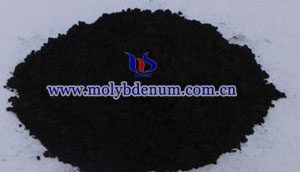
Interpretation of NMR relaxation measurements is not always straightforward, however. One of the requisites to extract detailed dynamic information from the NMR studies is to determinate the interactions responsible for the relaxation process. The dominant nuclei interactions in ionic conductors and molecular solids are: (1) magnetic interactions which couple to the nuclear magnetic dipole moments, and (2) quadrupolar interactions which accounts for the interaction between the non-cubic electric field gradient (EFG) at the nuclear site and the quadrupole moment of the nucleus with spin I >1.
In the present contribution we probe 7Li(I = 3/2) to illustrate the potential of the NMR techniques to study the molecular architecture and lithium dynamics in nanocomposite formed by the co-intercalation of lithium and dialkylamines in molybdenum disulphide. In the last decade, there has been growing the interest in intercalation compounds based on transition metal dichalcogenides because of their potential applications as electrodes in solid-state batteries. Additionally, the study of the dynamics of the species intercalated in layered materials constitutes one interesting problem in the field of solid-state physics. A number of recent studies have been addressed to the arrangements and the dynamics of species confined in low-dimensional spaces.
In a previous study we reported a carbon (13C), proton (1H) and lithium (7Li) NMR investigation of the nanocomposite formed by the intercalation of lithium and diethylamine into molybdenum disulphide, Li0.1MoS2[C4H10NH]. Here, we extend this study to include the nanocomposites prepared with larger amines, such as C8H18NH (dibutylamine) and C10H22NH (dipentylamine). Our purpose is to provide a more extensive discussion showing how the NMR line shape and relaxation studies can be used to bring up information on both the molecular architecture and the lithium dynamics in these systems.
Molybdenum Disulfide (MoS2) Synonyms:
molybdenum disulfide; MoS2, molybdenum(IV) sulfide; molybdenum sulfide, CAS# 1317-33-5, molybdenum disulphide, molybdenite, molybdenum sulphide, molybdic sulfide, molybdic sulphide, MoS2, black sulfide,
Molybdenum Disulfide (MoS2) Formula:
MoS2
Molybdenum Disulfide (MoS2) Description:
a) Functions as a boundary lubricant. It is insoluble in water and dilute acids.
b) Molybdenum disulfide is the inorganic compound with the formula MoS2. This black crystalline sulfide of molybdenum occurs as the mineral molybdenite. It is the principal ore from which molybdenum metal is extracted.
Molybdenum Disulfide (MoS2) Typical Chemical Properties Available:
98%
Molybdenum Disulfide (MoS2) Particle Size Grades Available:
a) 20 mesh x down
b) 50 mesh x down
c) 150 mesh x down
d) 325 mesh by down
e) Median particle size of 1 - 2 microns (Super fine grade)
Molybdenum Disulfide (MoS2) Nominal Physical Constants:
| Molar Mass (g/mol.) | 160.08 |
| RTECS Number | QA4697000 |
| Density (g/cm3) | 5.06 |
| Melting Point (°C) decomp | 1185 |
| pH Value (10% aqueous sol.) | |
| Odor | |
| Operating Temperatures (Deg. F) | ~ Up to 750 |
| Mohs Hardness @20°C | |
| Specific Heat (cal-mol-c) | |
| Appearance | black solid |
| Crystal Structure | hexagonal |
| Merck | 12.6318 |
Molybdenum Disulfide (MoS2) Typical Applications:
a) Dry lubricant for cold metal forming and extruding operations
b) Maintenance lubricant where oil and grease cannot be used
c) Friction reducing additive for grease and oil
Molybdenum Disulfide (MoS2) Packaging Options:
One lb. can, 5 lb. can, 25 lb. pail, 200 lb. fiber drum, super sacks and loose bulk
Molybdenum Disulfide (MoS2) TSCA (SARA Title III) Status:
Listed
Molybdenum Disulfide (MoS2) CAS Number:
CAS# 1317-33-5
Molybdenum Disulfide (MoS2) UN Number:
1950
If you have got any question or inquiry of molybdenum, please feel free to contact us by email: sales@chinatungsten.com, sales@xiamentungsten.com or by telephone:86 592 512 9696/86 592 512 9595.